
Is the U.S.–Iran Peace Deal Really Close? What We Actually Know So Far
President Donald Trump says a new agreement with Iran is “largely negotiated,” with reports pointing to a proposed 60-day ceasefire and the reopening of the Strait of Hormuz. But despite optimistic statements, major disagreements over Iran’s nuclear program and regional security remain unresolved. Here’s what has been confirmed — and what is still uncertain.
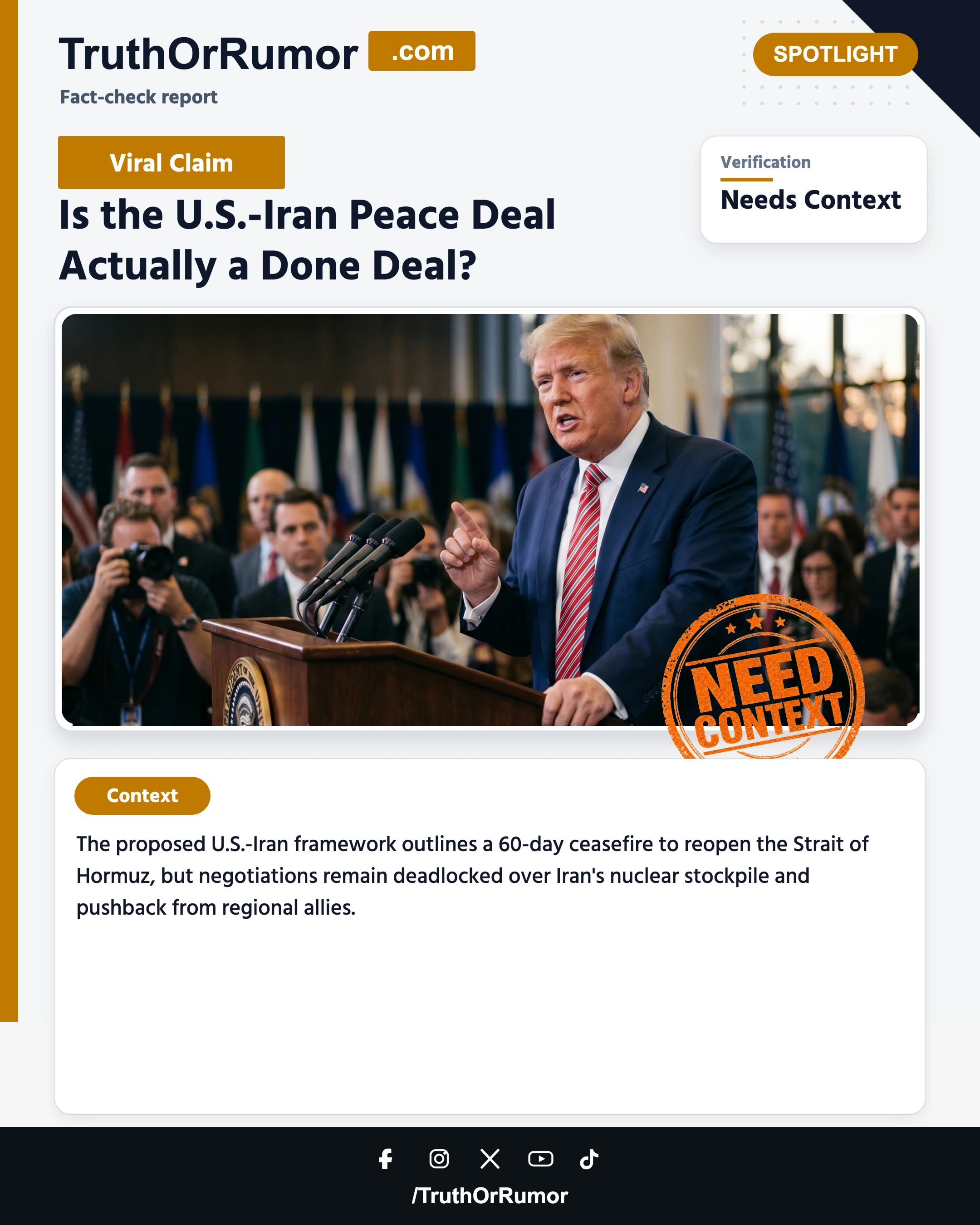
Diplomatic discussions between the United States and Iran have intensified following recent comments from President Donald Trump, who described a potential agreement as “largely negotiated.” The statement immediately sparked speculation across international media about whether Washington and Tehran are approaching a historic breakthrough - or whether the optimism may be premature.
According to reports circulating from several news organizations, negotiators are discussing a framework that could temporarily reduce tensions in the region through a proposed 60-day ceasefire arrangement. One of the key reported objectives is the reopening and stabilization of the Strait of Hormuz, one of the world’s most strategically important shipping routes for global oil transportation.
The Strait of Hormuz has remained a major concern for global markets and regional security observers because disruptions in the area can directly affect international energy prices and shipping operations. Any agreement that guarantees safer passage through the waterway would likely have significant economic and geopolitical consequences far beyond the Middle East.
Reports also suggest that the negotiations may involve limited sanctions relief for Iran in exchange for specific commitments related to regional military activity and nuclear oversight. However, this is where the negotiations appear to become far more complicated.
One of the biggest unresolved issues reportedly centers around Iran’s nuclear stockpile and the level of international inspection access that Tehran would be willing to accept. Previous negotiations between the two countries have repeatedly stalled over verification requirements, uranium enrichment limits, and enforcement mechanisms.
In addition to disagreements between Washington and Tehran, several U.S. allies in the region are said to be closely monitoring the talks with caution. Critics fear that a rushed agreement could provide temporary political stability while leaving deeper security concerns unresolved. Others argue that even a temporary diplomatic breakthrough could reduce the risk of wider regional conflict and create an opening for more comprehensive negotiations later.
Despite growing online claims that a “peace deal is finalized,” there is currently no official confirmation that a binding agreement has been signed by both governments. Much of the available information still comes from anonymous officials, media leaks, and preliminary reporting rather than formal treaty announcements.
This distinction is important because diplomatic negotiations often change rapidly behind closed doors. Statements made publicly by political leaders may reflect optimism or negotiation strategy rather than finalized policy commitments.
For now, the situation appears to be best understood as an active and potentially significant diplomatic negotiation - not yet a guaranteed peace agreement. Whether the talks ultimately lead to a lasting breakthrough or collapse under unresolved disagreements will likely become clearer in the coming days and weeks.
Until official documents, joint statements, or verified implementation steps are released, claims describing the agreement as completely finalized should be treated with caution.
View Primary Source